


Every corner of Phuket has a story, but few have travelled as far as Surin. What was once a
sleepy fishing village on the island’s west coast is today one of the most exclusive addresses in
Southeast Asia, spoken about in the same breath as the world’s great luxury coastal enclaves.
Understanding how Surin got here tells you a great deal about why it continues to command
attention from travellers, residents and investors alike.
The Early Years: A Coconut Grove by the Sea
Long before Surin appeared on any luxury travel list, this stretch of coastline was defined by
coconut plantations, fishing boats and a handful of simple, family-run restaurants shaded
beneath the trees. There was no beach club scene, no boutique hotel strip, nothing that
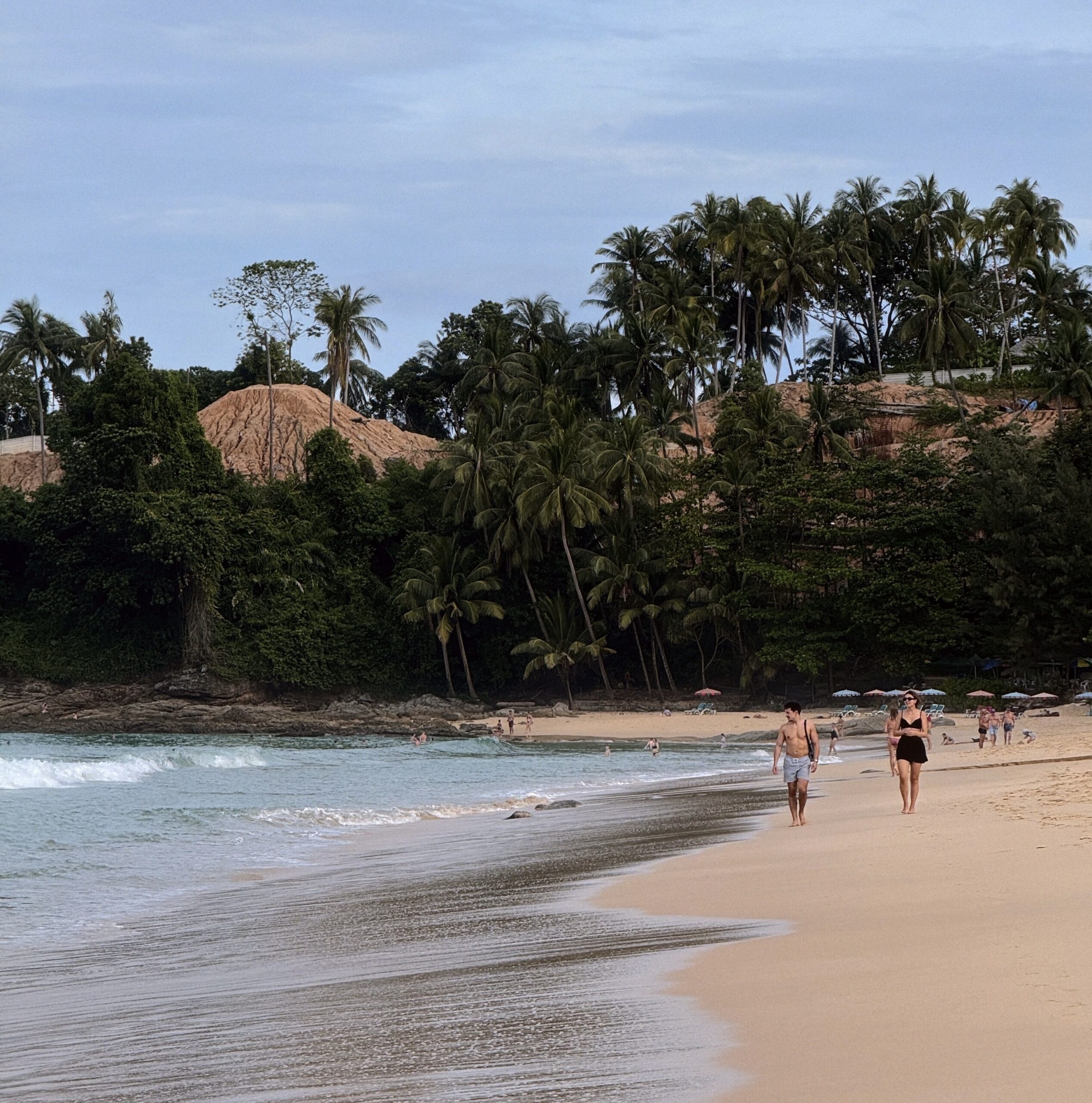
resembled the polished village of today. Locals knew the beach for its clear water and soft
sand, and a small number of early expatriates made the drive from Patong simply because
the sea here was worth it.
The first hints of change arrived in the early 1980s. In 1982, a hotel now known as The Surin
was built on nearby Pansea Beach, originally under the name “The Pansea.” A few years later,
in 1988, Adrian Zecha opened Amanpuri on a headland above the same stretch of coast,
transforming a former coconut plantation into what would become the flagship of the Aman
brand. Neither of these openings looked, at the time, like the beginning of a movement. Both
were quiet, deliberately understated properties built around privacy rather than spectacle.
But together, they planted the seed of what Surin would eventually become: an address
defined by restraint, rather than scale.
The 1990s: Still a Hidden Gem
Through the 1990s, Surin remained largely under the radar. It was a beautiful but modest
stretch of sand, appreciated mostly by those who already knew where to look. While other
parts of Phuket were beginning to develop rapidly around mass tourism, Surin stayed
comparatively untouched, its handful of resorts operating quietly above a beach that had yet
to see a beach club, a boutique or a Michelin-trained kitchen.
The 2000s and 2010s: A Village Grows Around the
Beach
The real transformation happened gradually, and it took a different shape to much of the rest
of Phuket’s coastline. Rather than developing into a strip of beachfront bars and clubs, Surin
grew inward, just back from the sand, around a small village-style hub often referred to locally
as Surin Plaza. Boutique restaurants, wine bars, coffee shops and design-led cafés established
themselves here, alongside long-running local favourites such as Tukta Restaurant, perched
on the rocks at the southern end of the beach. A little further along, a Michelin Guide-listed
restaurant and several well-regarded steakhouses and grill concepts added further culinary
credibility to the area, giving Surin a genuinely serious dining scene without ever needing a
beach club to anchor it.
It’s worth clarifying a common point of confusion here. Surin is often mentioned in the same
breath as the beach club scene that Phuket became known for from the mid-2000s onwards,
but that scene actually took root just up the coast in neighbouring Bang Tao, home to venues
such as Catch Beach Club. Surin’s own beachfront has followed a different, quieter path, and
this distinction matters: it’s part of what has kept Surin Beach itself so unspoilt.
That character has, in fact, been actively protected. Surin Beach has twice seen its beachfront
vendor structures cleared by local authorities as part of Phuket-wide efforts to preserve
public beach land, first in 2016 and again in 2025. Rather than diminishing the beach, each
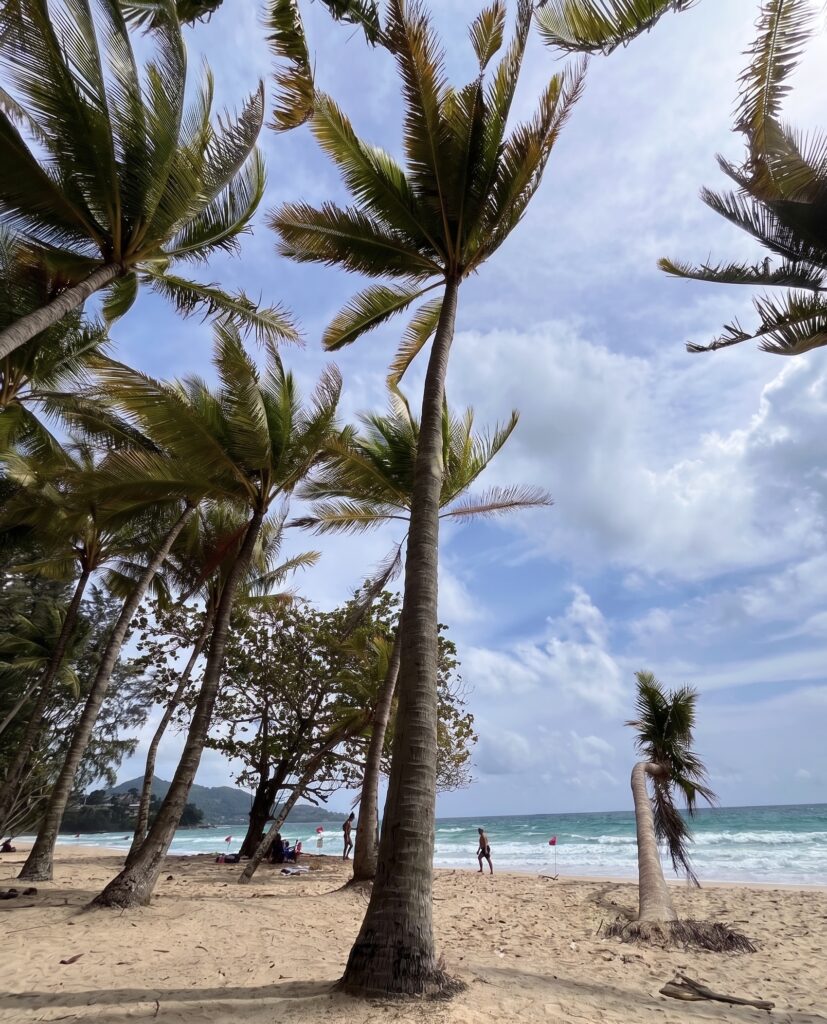
clearance has left it looking more natural, with soft sand and coconut tree-shaded shoreline
largely free of permanent structures. Today, Surin functions less as a beach lined with
restaurants and more as a beautiful, protected stretch of coastline with an excellent village of
dining and lifestyle options just a short stroll inland, a distinction that has become part of its
appeal to residents who value the beach as a natural amenity rather than a commercial strip.
Today: A Complete Neighbourhood, Not Just a
Beach
As Surin’s own character solidified, the wider district around it matured into one of Phuket’s
most complete lifestyle zones. Cherngtalay, the area encompassing Surin, has grown to
include developments such as Boat Avenue and Porto de Phuket, home to supermarkets,
clinics and further dining options, alongside the long-established Laguna Phuket golf and
resort complex close by. International schools, private healthcare and a substantial
permanent expatriate community have all taken root within a short drive of Surin Beach,
turning what was once a resort curiosity into a genuine place to live year-round.
Property has followed the same trajectory. Villa estates around Surin, particularly on the
exclusive headland near Laem Singh, have delivered some of the strongest capital
appreciation on the island, and the arrival of major developers confirms the trend is far from
over.
Infrastructure has continued to catch up with demand, too. Local authorities have begun
construction of a new skywalk viewpoint on Ta-Ma Cape, the headland separating Surin
Beach from neighbouring Pansea Beach, adding a further public attraction to an area that
has traditionally kept much of its natural beauty behind private hotel gates.
What Hasn’t Changed
For all this growth, what is perhaps most notable about Surin’s evolution is what it has
deliberately avoided becoming. Unlike Patong, or the beach club row that developed in
nearby Bang Tao, Surin has never chased volume tourism or built its identity around its
beachfront commercially. There is no strip of neon signage, no beachfront nightlife, no
high-rise skyline crowding the shore, and, following the recent clearances, not even much in
the way of permanent beach infrastructure. The philosophy that Amanpuri and The Surin
established in the 1980s, privacy over spectacle, quality over quantity, still shapes how the area
develops today.
Even as the village around it has grown busier and more sophisticated, Surin
Beach itself has largely returned to something closer to its original, unhurried character.
This is, in many ways, the clearest explanation for Surin’s enduring appeal. The area has grown
considerably in profile, sophistication and property value over the past four decades, yet its
beach has, if anything, become quieter and more natural, while the neighbourhood around it
has become one of the most complete and desirable on the island.
Few destinations manage
that balance, and it is precisely why Surin continues to attract a discerning crowd, whether
they are visiting for a week, buying a beachfront villa, or considering a condominium as their
next investment on Phuket’s west coast.
Looking Ahead
With continued developer interest, ongoing infrastructure investment, and a neighbourhood
that has matured into one of Phuket’s most complete lifestyle destinations, Surin’s story is still
being written. What began as a quiet coconut grove by the sea has become one of the
island’s most desirable postcodes, and if the past four decades are any indication, its
evolution is far from finished.
Part of what makes this evolution so appealing is how well it works alongside Surin’s
neighbours. Bang Tao is little more than a stone’s throw up the coast, and its own recent
development is bringing new relevance to that proximity. The Zero Bang Tao, an eco-focused
condominium project currently taking shape in Bang Tao, is a good example: it sits close
enough to Surin that residents can enjoy its lifestyle offering without straying far from home,
while Surin itself retains the quieter, more residential character that has defined it since the
1980s. It’s a small but telling shift, another sign that even as new development lands nearby,
Surin’s own evolution continues on its own, more understated terms, with everything else
simply a short drive away.
Curious how Surin’s growth continues to shape opportunities on Phuket’s west coast today?
Get in touch with our team to find out more.